History and Resources
The true stories behind Drawn from Memory
Whenever I read a novel "based on real events," I'm curious which are the real ones and which aren't. Here's a few details about that. Learn more about Denmark and Terezin and their role in Holocaust history here.
Hover over a picture, or select the picture or + to reveal its story. Select again to close.
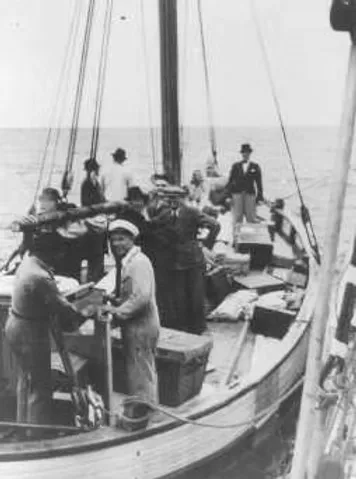 Danish Rescue of the Jews
The details about the rescue of the Jews in Denmark are based on true events. Denmark saved 7,220 of their people from deportation. The picture here is a fishing boat carrying some of them to Sweden.
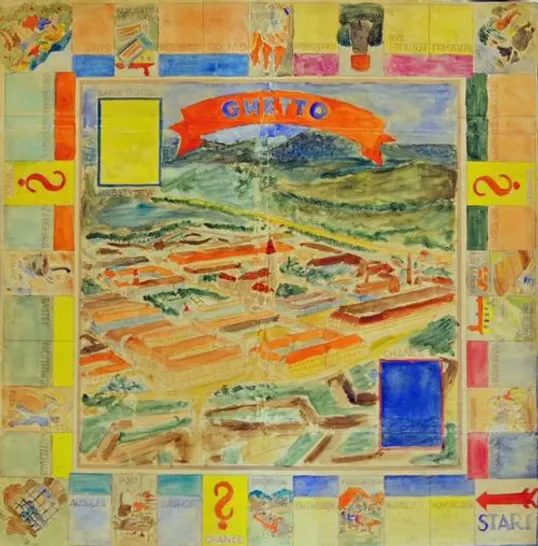 Monopoly boards in Terezin
Real Monopoly boards created for children of Terezin.
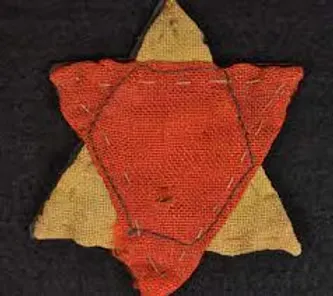 Pink Triangles
Pre-Nazi Berlin was one of the safest places to be queer at the time, but that changed when Hitler came to power. Pink triangles were placed on gay and bi men and trans women in Nazi Germany. Queer women and trans men were rarely persecuted for their sexuality. The pink triangle shown here indicates the person was also Jewish. Queer German men were not released from concentration camps after the war. Because homosexuality was still illegal there, people remained in prison until the early 1960's in some cases. By the early 1970's, the upside down pink triangle was reclaimed by gay rights activists to show their pride.
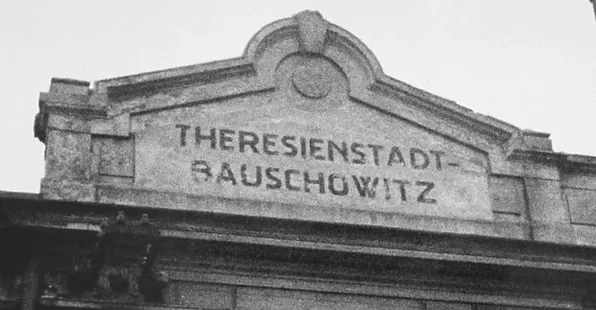 Life inside Terezin
Terezin was the Czech name of the camp. The Germans referred to it as Theresienstadt. I called it Terezin throughout the book to avoid confusion.
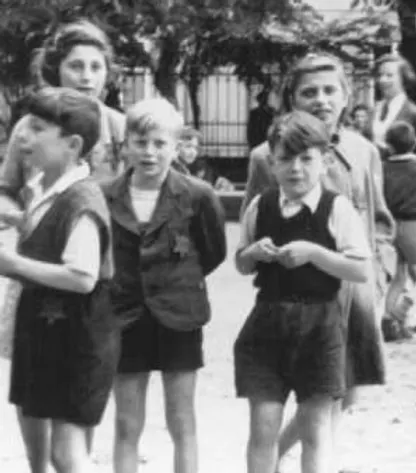 Red Cross Visit
The Red Cross visited Terezin in 1943. The "Embellishment" was the effort to use Terezin as a propaganda tool as shown in the book. People tried to slip notes to the delegates, but they still found the camp "acceptable." The picture is of the children calling to the Commandant at the soccer game.
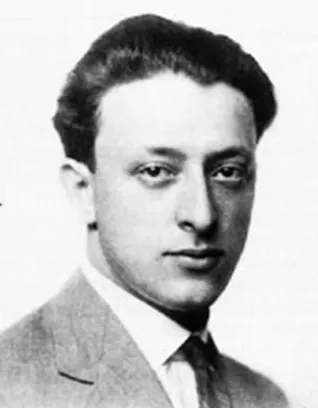 Defiant Requiem
In real life, the Defiant Requiem was played at the Red Cross visit. The choir and their real-life director, Rafael Schacter, were sent to Auschwitz. This piece is played all over the world, accompanied by a multi-media show in honor of their brave performance.
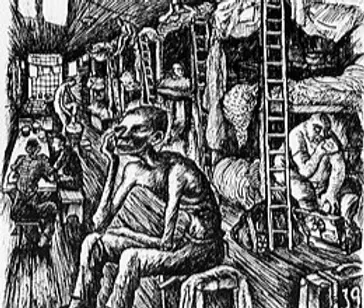 Artist's Affair
Like in the book, four artists were caught trying to get artwork like this to the Allies. One was beaten to death. The rest were sent to Auschwitz with their families. Leo Haas was the only one to survive. He went back to Terezin to retrieve more drawings like this one.
Resources
Book club
Reading Drawn from Memory for your book club?
Here are some questions to get the conversation started!
- What do you think the title, Drawn from Memory, means?
- Were you surprised to learn Denmark saved 99% of their Jewish population? Why do you think they did this when so many other countries did not?
- The author, Laura Hatosy, has said, “I hate the phrase ‘What doesn’t kill you makes you stronger.’ I hope no one takes my book to mean that our traumatic experiences are in some way good for us.” What is the difference between the themes of Drawn from Memory and the idea that trauma is good for people?
- What would you do if you had Rachel’s gift?
- Which character did you relate to the most and why? Who was your favorite?
- Terezin was used as a propaganda camp, to prove they weren’t hurting the Jews. What were some features of camp life there that surprised you?
- What role did the stuffed pony, Jubilee, play in the story?
- Due to the historical nature of the novel, the reader often knows more about what is happening than Rachel and the other characters. Did that spoil the outcome or add to the dread? How?
- Although small characters, what role do the Blume Sisters play in the novel?
- Were you surprised by the twist of Marek’s identity? Did it change your perspective of the Cauliflower at all? If so, how?

Want Laura to drop in via Zoom? Email the date to see if it works!
Hosting Guide
Here are some tips for the host on food, decorations, music and more!
Food
- Danish pastries: Called weinerbrod in Denmark (“Vienna bread” because it was made by Austrian bakers in Denmark). Recipe
- Danish chocolate torte: Mr. Muller’s chocolate tortes were so good, Annalise doesn’t mind getting sick after eating one. Recipe
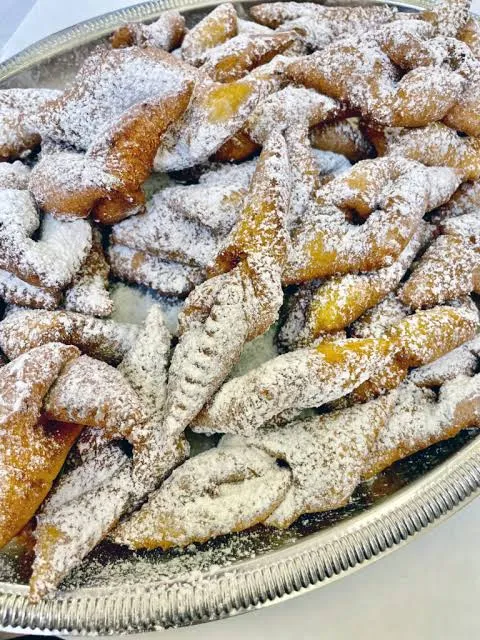
- Klejner: Also called Danish fried twists. Usually served during the winter holidays in Rachel’s family and Denmark, this dessert can be enjoyed any time. Recipe
- Glogg: Usually served during the winter holidays in Scandinavia and in Rachel’s family. Recipe
- Akvavit: This Scandinavian spirit is distilled from grain or potatoes and flavored with herbs. Rachel’s father drank this at special occasions.
Other Details
- Tape up movie posters from Cary Grant films The Philadelphia Story, Arsenic and Old Lace, and Suspicion.
- Play Verdi’s Requiem in the background. Listen
- Provide supplementary information about Terezin: Video overview
Teacher Resources

Click here to view the FREE teacher guide including games, activities, and writing assignments.